

McTrans Timeline
40 Years of Turning Transportation Research Into Practice
For 40 years, McTrans has been the trusted bridge between transportation research and practice, helping professionals apply the transportation methodology, standards, and tools with confidence
1972 – 1986
1972
The Transportation Research Center is founded
The Transportation Research Center (TRC) was founded at the University of Florida. The TRC would go on to operate both McTrans and the Florida Transportation Technology Transfer Center.
Transportation Research Board
1980
Early microcomputer traffic software at UF
Professor Ken Courage received a safety grant from the Florida Department of Transportation (FDOT) to provide local traffic offices with Apple II computers and develop software for their use. Courage wrote several early applications that grew in popularity as personal computers became more accessible.

Professor Kenneth Courage
1986
McTrans is Founded
The University of Florida was awarded a grant to establish McTrans Center to facilitate software distribution and support to the transportation and planning community. The name “McTrans” was an adaptation of “Microcomputers in Transportation”.
1987 – 2013
1987
Bringing HCM Analysis to the Desktop
The Federal Highway Administration asked McTrans to distribute and maintain the Highway Capacity Software (HCS). The first release of HCS gave transportation professionals a practical way to automate calculations from the Highway Capacity Manual using personal computers.
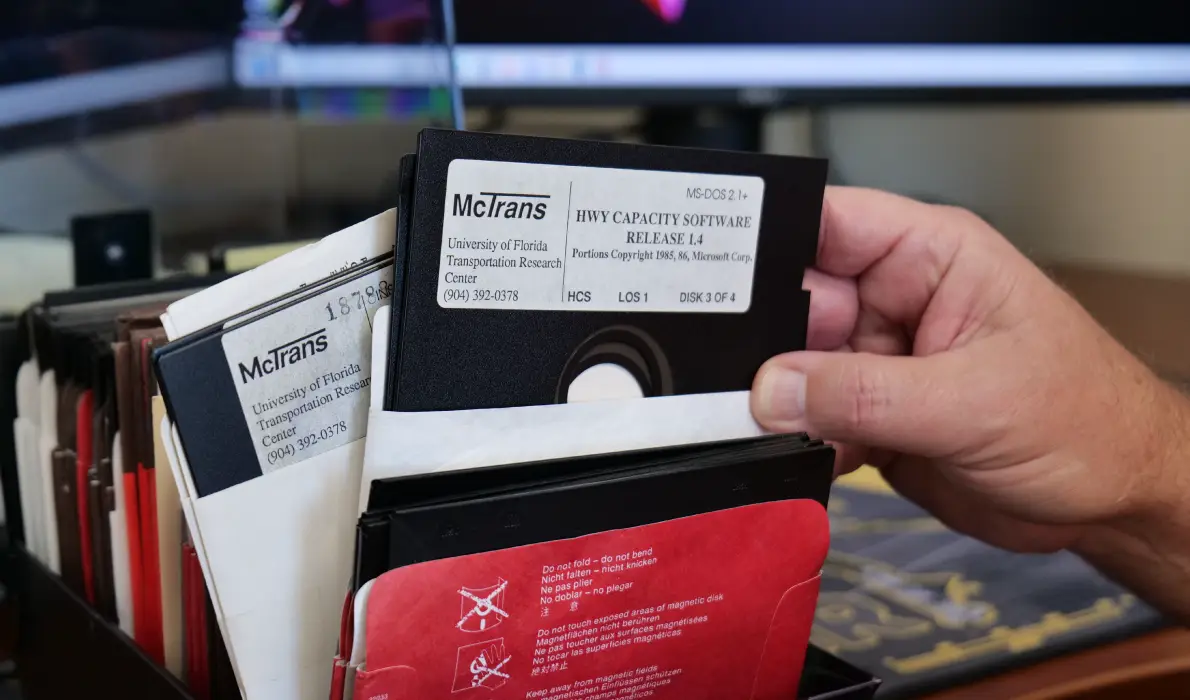
Diskette of HCS1.4
1988
Self-Supporting Organization
Following the conclusion of its founding grant, McTrans became a fully self-supporting organization, positioning the center for decades of service to the transportation industry.
“This is a quite unique success story of a center that has continued to provide software distribution, development and support service without any funding from any source, except for user fees.”
— 25th anniversary, Vol. 45, July 2011
1990
First Training Course
McTrans presented its first Highway Capacity Software training course — marking the beginning of a training program that would serve transportation professionals for decades to come.
1996
Becoming a National Transportation Software Resource
McTrans expands as a national clearinghouse, helping agencies, consultants, and researchers get the tools they need to apply industry research and standards.
2000
Supporting a New Generation of HCM Methods
The new edition of HCM introduced new methodologies for freeways, intersections, corridors, and multimodal analysis. McTrans updated HCS to help practitioners apply these increasingly sophisticated methods in everyday practice. McTrans puts its catalog on the web, replacing mail-order diskettes and CDs with a faster way to find, license, and update software.
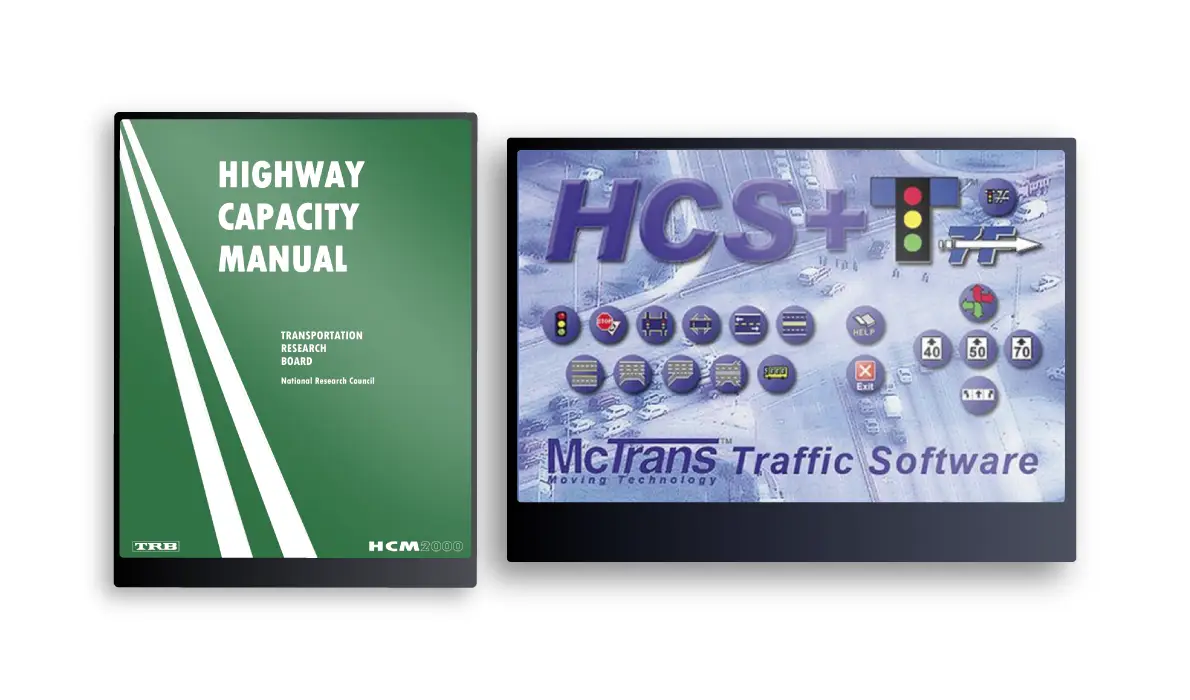
HCM2000 (left) and HCS+(right)
2007
TSIS-CORSIM: Expanding Into Traffic Simulation
The McTrans Center officially acquired the development, maintenance, and support of TSIS-CORSIM from the FHWA, strengthening its role in simulation-based transportation planning, traffic operations, and performance evaluation.
2010
Advancing Multimodal Analysis
With the release of HCM 2010, McTrans expanded HCS capabilities to support multimodal analysis, helping practitioners evaluate pedestrians, bicyclists, transit, and motorists within a unified framework.
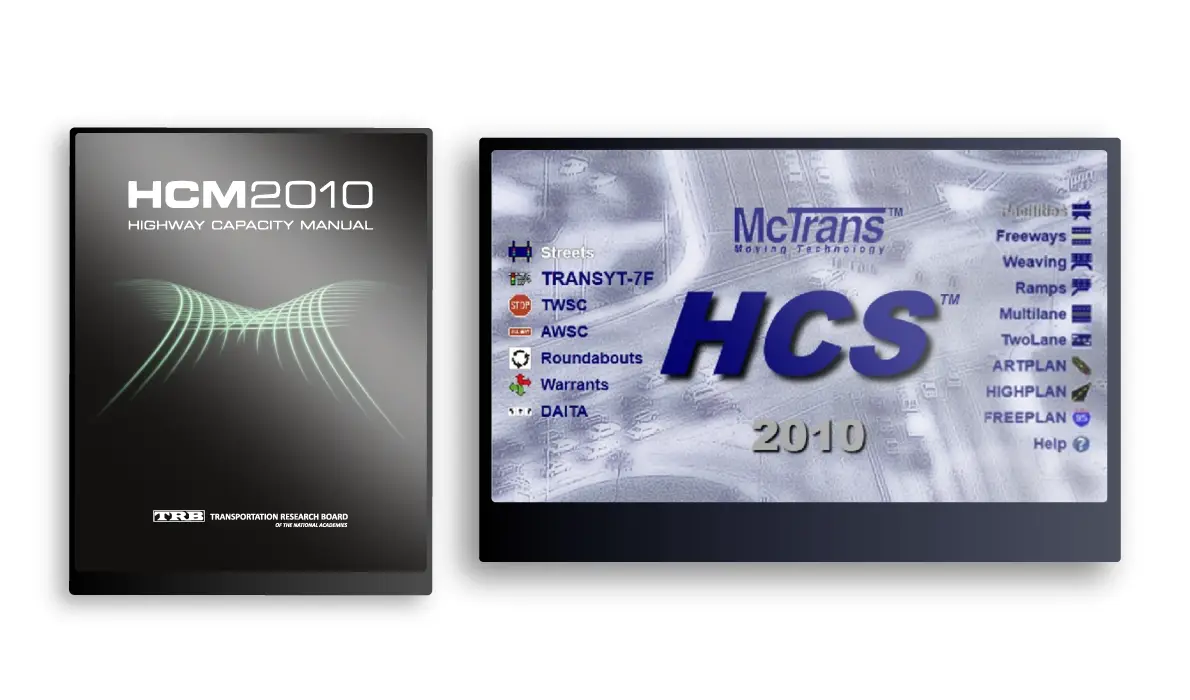
HCM2010 (left) and HCS2010(right)
2013
Part of UFTI
UF founded the University of Florida Transportation Institute (UFTI). McTrans continues as the institute’s software center—the largest transportation software dissemination program of its kind.
“We develop software for traffic simulation and transportation planning that is used by universities all around the country.”
— Lily Elefteriadou, UFTI Launch
2016 – Present
2016
Introducing the Highway Safety Software
McTrans introduced Highway Safety Software (HSS), expanding its offerings beyond capacity and operations analysis to support Highway Safety Manual predictive methods and roadway safety evaluation.
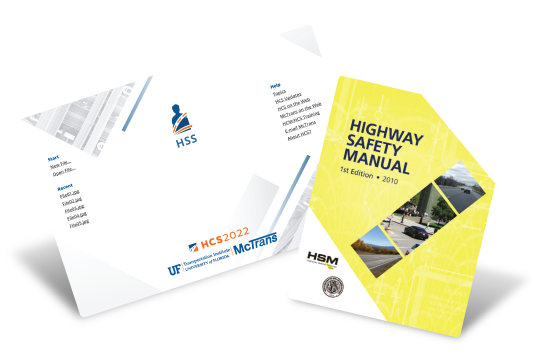
HSS (Left) and HSM (right)
2017
HCS7 and the HCM 6th Edition
The launch of HCS7 brought implementation of the 6th Edition of the Highway Capacity Manual, helping practitioners analyze increasingly complex transportation systems by adding travel time reliability, managed lanes, work zones, and updated roundabout and alternative-intersection methods.
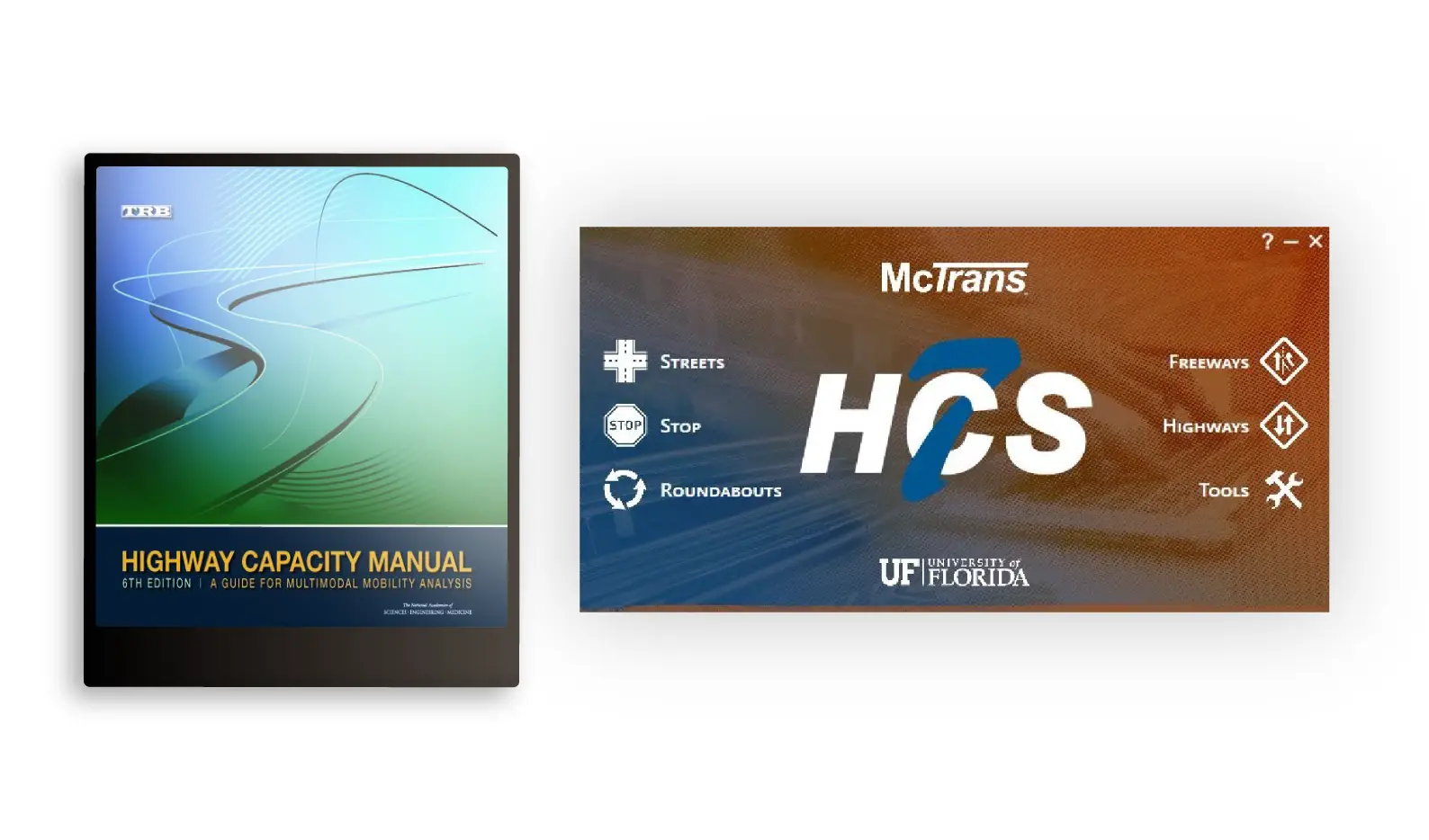
HCM7 and HCS7
2020
A Complete Transportation Analysis Ecosystem
McTrans expanded its integrated suite of tools, supporting capacity analysis (HCS), safety evaluation (HSS), and traffic simulation (TSIS-CORSIM), while incorporating the latest HCM, HSM, and MUTCD-based methodologies.

Logos of HCS, HSS, and TSIS-CORSIM
2022
HCS 2022 and HCM 7th Edition
HCS implements the HCM 7th Edition, including updated pedestrian methods, two-lane highways, connected-and-automated vehicle factors, and network analysis.
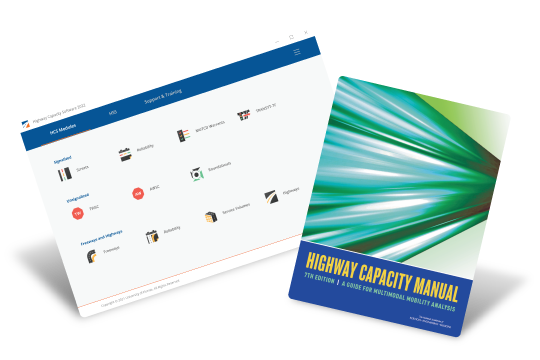
HCS 2022(left) and HCM7(right)
Present
Serving Transportation Professionals Worldwide
Now part of the University of Florida Transportation Institute (UFTI), McTrans supports more than 15,000 users across 77+ countries through software, training, technical support, and technology transfer, continuing its mission of transforming transportation research into practice.
